Sell or Hold Your Commercial Building? A Bergen County Owner's Guide
Five questions that usually decide it, plus the New Jersey costs that change what you walk away with.
7 min read · Updated Oct 2026
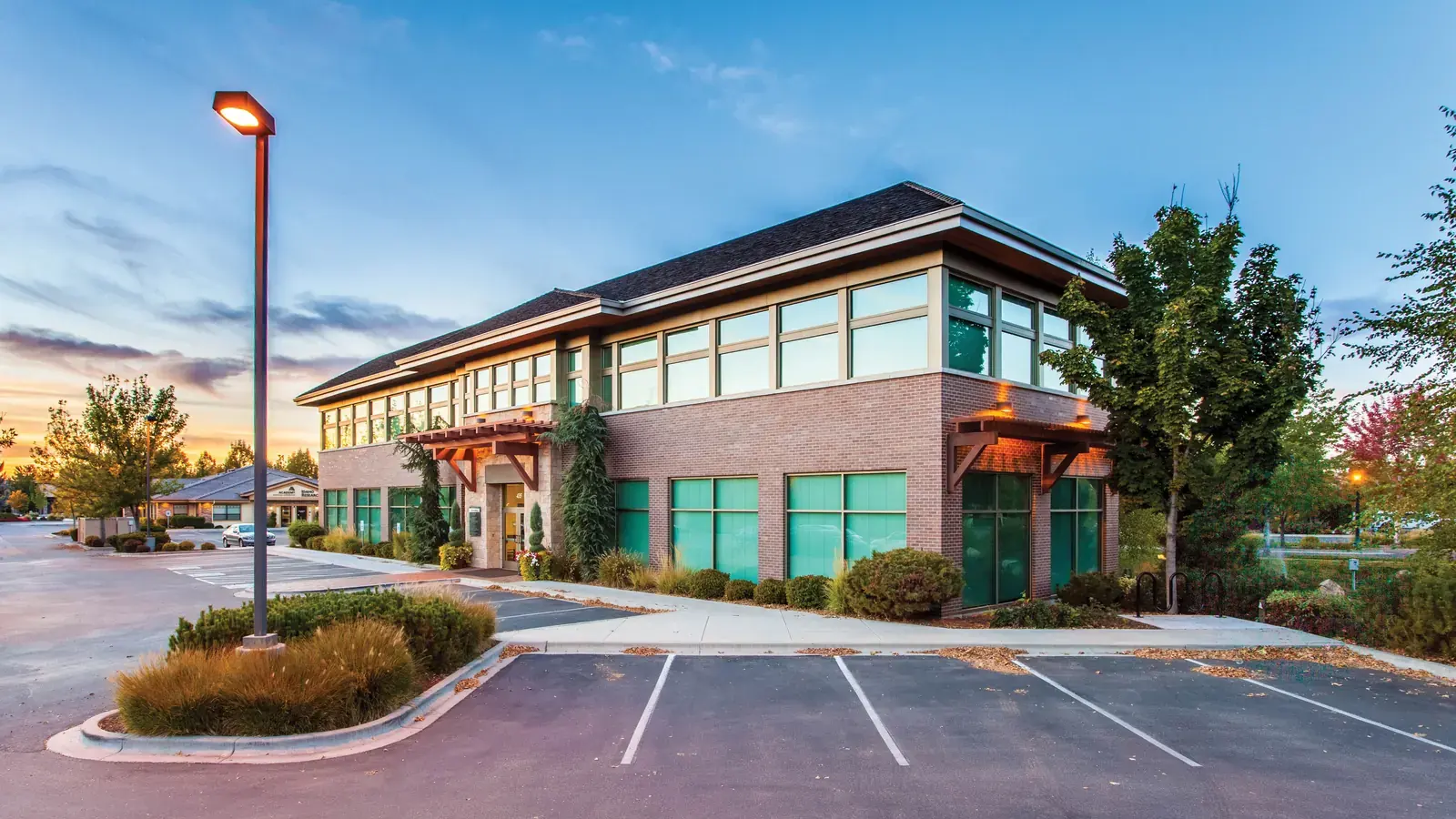
If you own an office, retail, or mixed-use building in Bergen County, the sell-or-hold question rarely arrives all at once. A big lease is coming up, the roof is aging, or a neighbor just sold, and you start wondering whether the building is still the best use of your money and your time. This guide covers the factors that usually settle the question, the New Jersey costs that change what you'd actually net from a sale, and five questions to help you decide.
Curious what your building could sell for? · Prefer to talk? Call or text .
Key takeaways
- Start with what the building does for you (income, time, risk, family plans) before thinking about price.
- In New Jersey, the seller now pays the Graduated Percent Fee on most commercial sales over $1 million, on top of the Realty Transfer Fee. Build both into your net.
- A 1031 exchange can be a middle path, but its 45- and 180-day clocks mean the planning starts before you sell.
On this page
Start with what the building does for you
Before you think about price, get clear on what the property is doing in your life today.
- Income. Is the rent steady, and do you rely on it?
- Time. How many hours a month do tenants, repairs, and paperwork take?
- Risk. Is most of the rent coming from one or two tenants?
- Plans. Do you want to pass it to family, or would they rather have cash someday?
Owners who rely on the income and enjoy running the building often hold. Owners who are tired of the work, or who have most of their net worth tied up in one property, often start looking at a sale or a swap into something easier.
Know your local market
Bergen County isn't one market, and the likely buyer or tenant depends on where you are.
- Paramus, where Route 4 and Route 17 meet, is a regional shopping destination. Retail and retail-adjacent buildings there track how shoppers and retail tenants are doing.
- Hackensack, the county seat, has many mixed-use buildings with apartments over storefronts. Owners there often hold a blend of commercial and residential income.
- Fair Lawn is largely residential. Its commercial space tends to be neighborhood retail, service, and office space that depends on local households.
None of this sets your building's value. It does tell you who is likely to be on the other side of the table.
The case for holding
Holding often makes sense when:
- The building is well leased to tenants you trust, on terms that run several more years.
- No big repairs (roof, HVAC, parking lot, facade) are coming due soon.
- You want the income more than a lump sum.
- Your heirs want to keep it, and you've talked about how.
Holding isn't "doing nothing." It still means renewing leases, keeping up with inspections, and checking your assessment each year. New Jersey assessment appeals must be received by April 1, or May 1 in towns that just completed a revaluation or reassessment [3].
The case for selling
Selling often makes sense when:
- A major tenant is leaving, and you don't want to carry the vacancy.
- Big capital work is coming, and you'd rather not fund it.
- Partners or family members want different things.
- You want to simplify, retire, or put the money somewhere else.
If you run a business in the building, selling doesn't have to mean moving. Some owners sell and lease the space back. It's a different kind of deal, so plan it with your attorney and CPA.
Weighing a sale, a lease, or a hold? Share the town, the rough size, and what you're considering, and request a confidential callback. · Prefer to talk? Call or text .
New Jersey costs to factor in before you sell
Realty Transfer Fee and the Graduated Percent Fee. New Jersey imposes a Realty Transfer Fee on the seller when the deed is recorded [1]. For sales over $1 million, there's also a Graduated Percent Fee. For deeds on transfers on or after July 10, 2025, it's imposed on the seller (grantor) instead of the buyer. The rate rises with the price: 1% over $1 million, 2% over $2 million, 2.5% over $2.5 million, 3% over $3 million, and 3.5% over $3.5 million, applied to the total price [1][2]. The Division lists Class 4A commercial property (other than industrial or apartment) among the classes it covers, and some exemptions exist [1]. The state's own example: a $2.75 million transfer owes $68,750 in this fee alone [2]. Your attorney or title company will confirm whether it applies to your sale.
Bulk sale notice. The Division's bulk sale page lists real property (land and buildings) among the assets a bulk sale can include. When the rule applies, the purchaser files Form C-9600 with a copy of the contract at least 10 business days before closing [4]. Your attorney will know whether it applies.
More on the fees: NJ mansion tax and realty transfer fee.
A middle path: exchanging into something easier
If you want to stay invested in real estate, just not in this building, a 1031 exchange may let you defer the tax on your gain by buying other investment real estate. The IRS says real properties are generally like-kind to each other, whether improved or unimproved [5].
The timing is strict. Replacement property must be identified within 45 days after you transfer the property you're giving up, and received within 180 days (or by your tax return due date, including extensions, if that's earlier) [6]. Much of the planning has to happen before you sell. See 1031 exchange basics.
Five questions to decide
1. If I had the money from this building today, what would I do with it?
2. What major repairs are coming in the next five years, and what will they cost?
3. How many years are left on my biggest lease?
4. After transfer fees and taxes, what would I actually net from a sale?
5. Have I talked with my CPA about selling, exchanging, and holding?
If three or more answers point the same way, that's usually your direction.
Ready to see where your building stands? Start with a few details: town, size, occupancy, and what you're weighing. · Prefer to talk? Call or text .
Sources
- NJ Division of Taxation, Realty Transfer Fee. the RTF is imposed on the seller; Graduated Percent Fee rates (1%–3.5%); Class 4A commercial listed; exemptions exist.
- NJ Division of Taxation, Amendments to Graduated Percent Fee on Realty Transfers over $1 Million (July 2, 2025). effective July 10, 2025; imposed on the grantor; the $2.75M → $68,750 example.
- NJ Division of Taxation, Assessment and Appeals. April 1 / May 1 appeal deadlines.
- NJ Division of Taxation, Bulk Sales. real property can be covered; C-9600 with the contract at least 10 business days before closing.
- IRS, Like-kind exchanges – Real estate tax tips. real properties generally like-kind, improved or unimproved.
- IRS, Instructions for Form 8824. the 45-day identification and 180-day receipt periods.
Related
General information, not legal, tax, or financial advice.